
Denmark’s Proposed Deepfake Law: Rethinking Identity, Copyright and AI Regulation
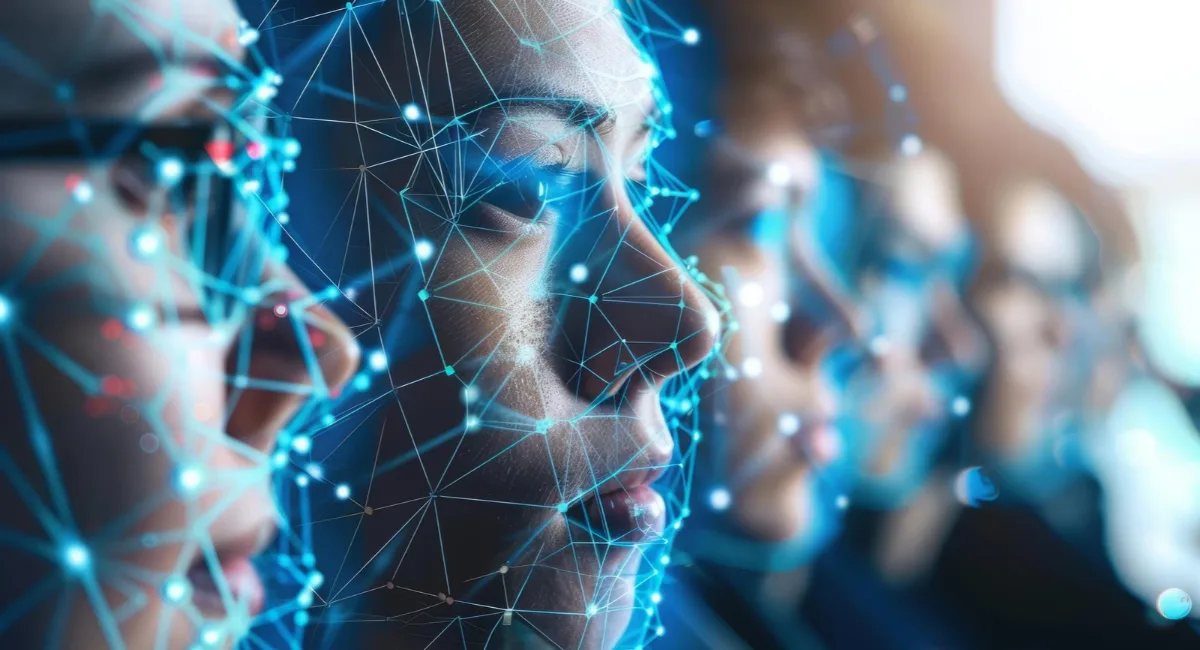
A person’s face and voice can now be reproduced by artificial intelligence without their participation, creating convincing representations of events that never occurred. These technologies raise a difficult legal question: when AI can imitate an individual without copying an existing copyrighted work, what legal protection does that individual have?
This question has long been relevant to the intersection of intellectual property and media law. Denmark’s proposed legislation brings these concerns into sharper focus by attempting to establish more explicit protection against the unauthorised digital reproduction of personal identity.
Introduced in October 2026, the Danish proposal seeks to protect individuals against the unauthorised public sharing of realistic digital imitations of their appearance and voice. It also proposes protection for performers against unauthorised digital reproductions of their performances. Its significance lies not merely in its attempt to regulate deepfakes, but in its use of copyright legislation to address a problem that extends beyond conventional intellectual property rights.
The Legal Gap: When Identity Is Reproduced Without Copying a Work
Deepfakes can be used to create fabricated endorsements, misleading political statements, fraudulent recordings and manipulated audiovisual content. The resulting harm may involve reputational damage, financial loss, harassment or the false attribution of statements and conduct to an individual.
Traditional copyright law may not always provide an adequate remedy. Copyright generally protects original creative expression, rather than a person’s face, voice or identity in itself. An AI-generated video may imitate an individual convincingly without copying a particular photograph, recording or film.
This distinction matters. If an AI system generates an entirely new video depicting a person making a statement they never made, the individual may have suffered a serious harm even where infringement of an existing copyrighted work is difficult to establish.
The legal challenge is therefore broader than unauthorised copying. It concerns whether individuals should have a clear legal basis to object to realistic digital representations that use their identities without consent.
Denmark’s Proposed Approach: Personality Protection Through Copyright Law
Denmark’s proposal seeks to address this gap by introducing protection against certain unauthorised digital imitations through amendments to its copyright legislation. The proposed framework covers individuals generally, rather than limiting protection to celebrities or public figures, and separately addresses digital imitations of performers’ performances.
The approach raises an important conceptual question: should the law protect personal identity through a framework traditionally designed to protect creative works?
Copyright and personality rights serve different purposes. Copyright protects original expression and supports creative production. Personality rights concern an individual’s interests in their image, identity and representation. Although these interests can overlap, they are not interchangeable.
Using copyright legislation may provide an established legal framework for enforcement. However, it also risks framing identity primarily as an asset that can be owned or commercially licensed. The harm caused by a deepfake is not necessarily economic. A fabricated video may damage a person’s dignity or reputation even where there is no commercial exploitation.
The Danish proposal is therefore a significant legislative development, but it also illustrates the difficulty of adapting existing intellectual property concepts to technological harms that do not fit neatly within traditional copyright principles.
Consent and the Limits of Digital Imitation
The proposed legislation seeks to strengthen the ability of individuals to challenge the unauthorised public sharing of covered digital imitations. However, any such protection must distinguish harmful impersonation from legitimate creative expression.
Satire, parody, caricature and political criticism often rely on imitation. An AI-generated representation of a public figure may be intended to comment on that person’s conduct rather than deceive an audience. Conversely, a realistic video falsely depicting the same person making a consequential announcement may be designed to mislead.
Denmark’s proposal recognises this tension by providing exceptions for forms of expression including satire, parody, pastiche and criticism. The practical challenge will be determining how these exceptions operate where the line between artistic expression and harmful misinformation is disputed.
A framework that restricts imitation too broadly could discourage legitimate commentary and artistic experimentation. Equally, exceptions that are too expansive could weaken the protection available to individuals targeted by harmful deepfakes.
Effective regulation must therefore consider context, purpose and potential harm, rather than treating every digital imitation as unlawful or assuming that every claimed satirical use is legitimate.
Privacy, Identity and Personal Autonomy
The deepfake debate also exposes a limitation in how privacy is often understood. Privacy is not confined to keeping personal information secret; it also concerns control over how information and representations of an individual are used.
Publishing a photograph does not necessarily amount to consent to an AI-generated video depicting the person in a fabricated situation. Similarly, appearing in a film or speaking publicly does not automatically authorise the cloning of one’s voice for a commercial endorsement.
This distinction becomes increasingly important as AI reduces the cost and technical difficulty of reproducing identifiable personal characteristics. Public visibility should not be confused with unrestricted permission to generate and distribute synthetic representations.
The legal response must also account for differences in access to remedies. Public figures and commercial performers may have greater resources to challenge unauthorised uses, while ordinary individuals targeted by humiliating or fraudulent deepfakes may struggle to identify the creator or secure the removal of content.
A meaningful framework must therefore protect personal autonomy as well as commercial interests.
Implications for India
Denmark’s proposal offers a useful comparative perspective for India, where deepfakes raise questions involving privacy, personality rights, intellectual property, defamation and intermediary liability.
A central issue for Indian law is whether existing remedies provide sufficiently clear and accessible protection where an individual’s identity is reproduced without authorisation but no conventional copyrighted work has necessarily been copied. The practical effectiveness of those remedies is equally important, particularly where content is distributed rapidly across platforms and jurisdictions.
Denmark’s approach should not be treated as a model that can be adopted without considering India’s constitutional and statutory framework. Its decision to place personality-related protection within copyright legislation raises questions about the appropriate legal basis for protecting identity and the safeguards needed to preserve freedom of expression.
Nevertheless, the proposal contributes to a wider debate about whether specific legislation is needed to address AI-generated impersonation more directly. Any future framework must reconcile the interests of individuals whose identities are reproduced, creators using synthetic media, technology platforms and the public’s interest in legitimate expression.
Conclusion
Denmark’s proposed deepfake legislation reflects a growing recognition that existing legal categories may not fully address the consequences of generative AI. By seeking to protect individuals and performers against certain unauthorised digital imitations, it attempts to establish a clearer basis for controlling the use of personal identity.
Its broader significance lies in the distinction between copying a creative work and reproducing a person. The former is traditionally addressed through intellectual property law; the latter may implicate dignity, privacy, reputation and autonomy, even where conventional copyright infringement cannot readily be established.
For India, the development offers an opportunity to examine whether existing legal remedies adequately address these harms and whether more explicit protection is required. The challenge is not simply to regulate a new technology, but to ensure that the law protects individuals without unnecessarily restricting satire, journalism, artistic expression or legitimate AI innovation.
As generative AI makes realistic impersonation increasingly accessible, the central legal question remains whether individuals have meaningful control over how their identities are reproduced and represented. That question extends beyond copyright and will continue to shape the development of AI regulation, media law and personality rights.